
Seven cities, countless memories, and a journey that stayed with me long after we returned home. Of all the places I’ve visited in the world, Morocco is where a piece of my heart was left and where I want to begin this story.
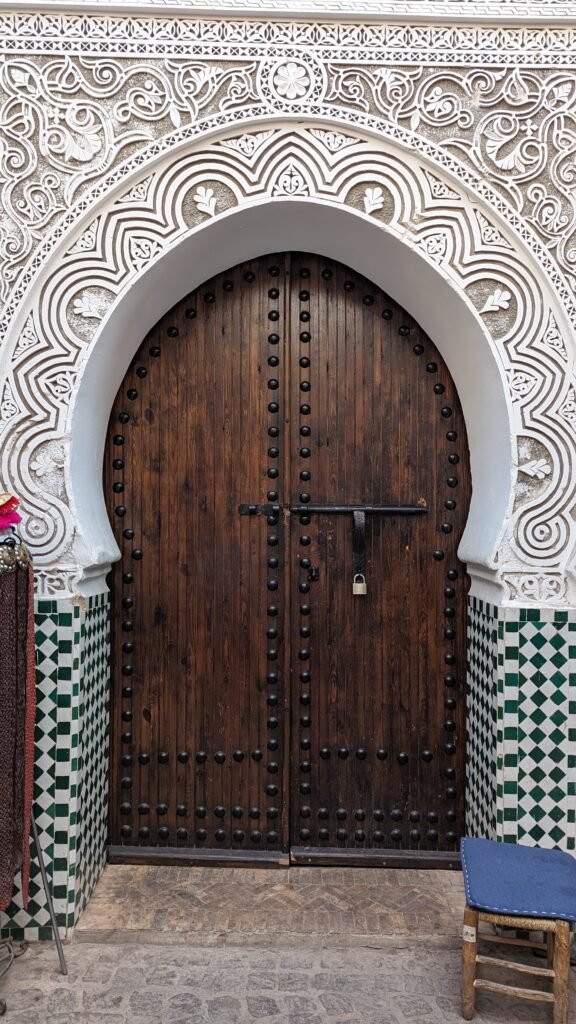
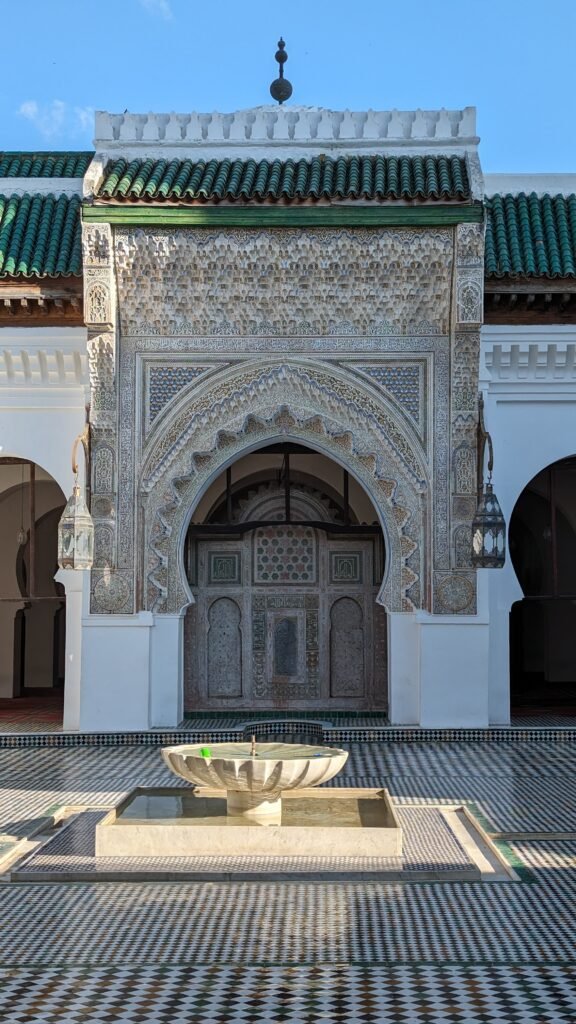
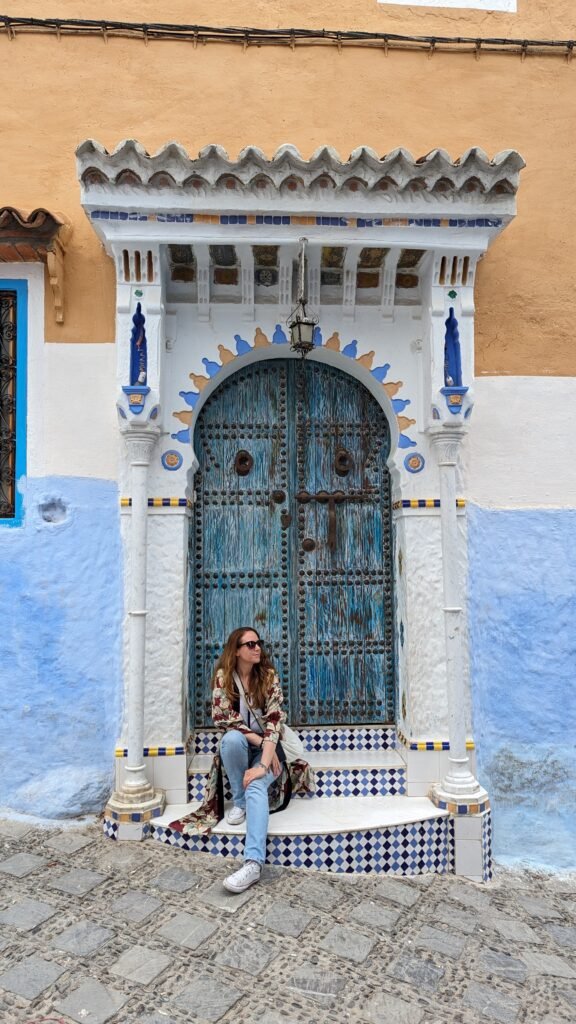
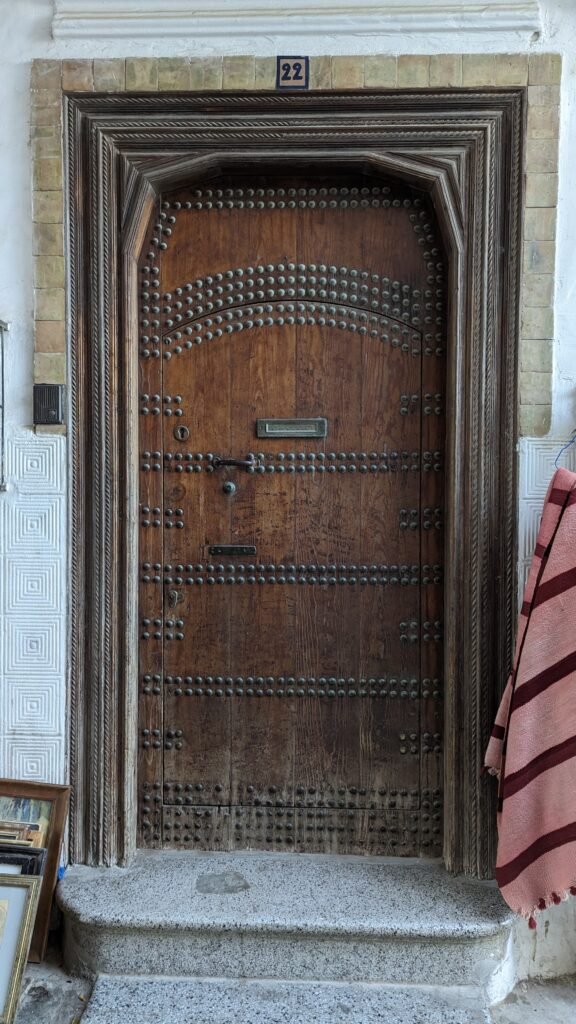
I have always been drawn to Moroccan style, the rich colours, intricate patterns, and unmistakable sense of mystery that seems to linger in every corner. Long before I ever set foot there, I felt pulled toward it, the idea of its bustling souks and hidden courtyards was calling to me.
I first visited Marrakesh in my twenties, and I was instantly captivated. The beautifully carved doors on almost every street completely fascinated me, each one hinting at a story beyond it. That first trip was spent in an all-inclusive hotel, with day trips to the bazaar and the old town, but even then, I couldn’t help but wonder what life was like behind those giant wooden doors of the traditional riads.
Last year, my husband and I finally planned a two-week itinerary to properly explore Morocco, and let me tell you now, it still wasn’t long enough. Check out the next blog post for the full itinerary as well as additional tips.
Tangier
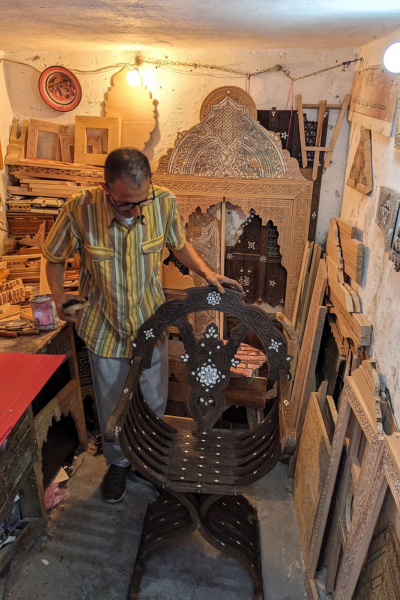
We began our journey in Tangier, a vibrant Mediterranean city in the north, where we spent a night exploring on foot. Wandering through its cobbled We began our journey in Tangier, a vibrant Mediterranean city in the north, where we spent or first night exploring on foot. There was something about the mix of cultures and the laid-back coastal feel that made it the perfect place to begin., I discovered shops filled with original, handmade pieces I longed to bring home objects that felt like small pieces of Moroccan soul. We came across a beautiful woodcarving workshop.
Wandering through its cobbled streets, I found myself constantly stopping at little shops filled with handmade pieces, beautiful objects I wanted to bring home, each one feeling like a small piece of Moroccan soul.
We stumbled across a woodcarving workshop that I still think about today. It was tiny but filled with many interesting pieces, yet the one that stood out most was a stunning chair that I still think about. If only it could have fitted in my suitcase. I’m still holding out hope that one day I’ll have a perfectly valid reason to go back and buy it.
Chefchaouen
Early the next morning, we travelled to the famous blue city of Chefchaouen, which exceeded every expectation I had. The warm hospitality we received at the beautiful Dar Meziana was the perfect introduction to the charming little town.
Nestled in the Rif Mountains, Chefchaouen is surrounded by lush greenery, which only enhances the magic of its blue-washed streets. Every corner feels softly painted, from powdery pastels to deep indigo, with sunlight shifting the tones throughout the day. It’s a place that invites you to slow down completely, to wander without a plan, pause on quiet steps, and take in the stillness that’s so different from Morocco’s busier cities.
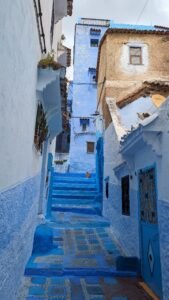
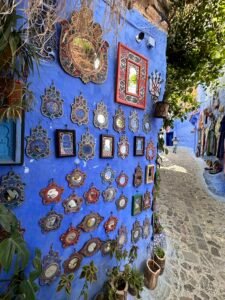
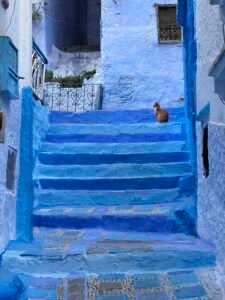
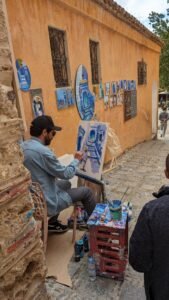
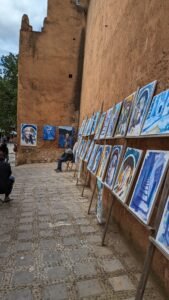
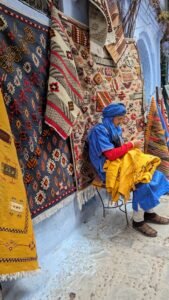
I could have stayed for days, getting lost in its narrow streets, soaking up the calm atmosphere, and making friends with the local cats who seemed to own the place. There’s a gentle rhythm to life here that’s easy to fall into. But as tempting as it was to stay, we had more of Morocco to see.
Fes
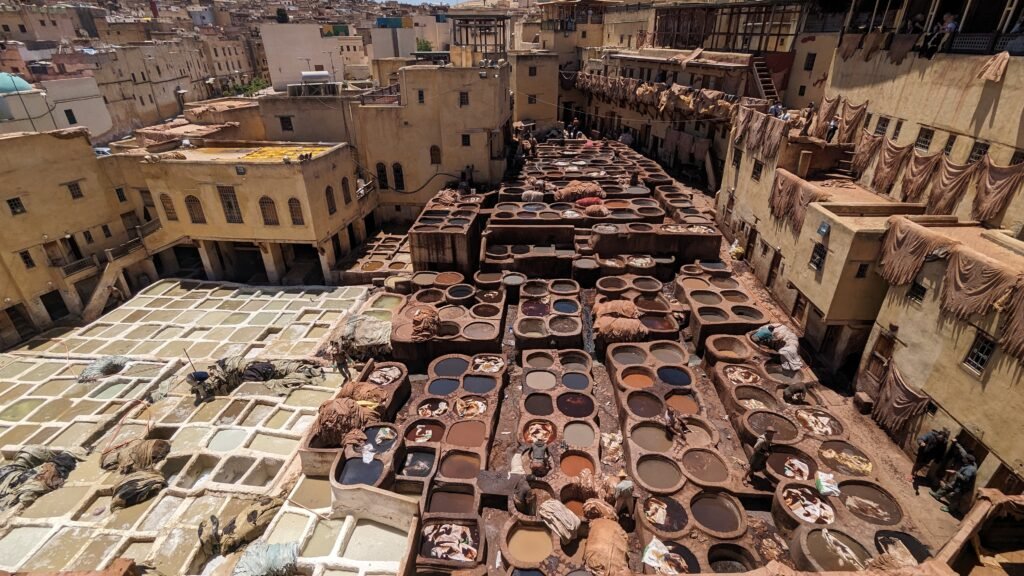
Arriving in Fes felt like stepping into a completely different world. Fes, a UNESCO World Heritage site bursting with vibrant souks, layered history, and an energy that couldn’t be more different from the peaceful charm of Chefchaouen we left behind. Famous for its ancient, labyrinthine medina (Fes el-Bali), Fes is often described as Morocco’s cultural and spiritual heart. It is a city where medieval Islamic architecture and traditional craftsmanship are not preserved behind glass, but lived in daily.
One of the main reasons we added Fes to our itinerary was my husband’s excitement to visit the Chouara Tannery, one of the oldest leather tanneries in the world. We had been warned about the overpowering smell… and those warnings were not exaggerated. Even with a sprig of mint practically glued to your nose, it’s a lot. That said, the experience is unforgettable. Watching the leather being dyed using centuries-old methods, from vantage points overlooking the stone vats, felt like stepping back in time.
Of course, like many other tourists, we also got completely lost. At one point, we found ourselves at a dead end in a particularly busy alley, slightly overwhelmed and half-jokingly wondering who might appear next to try and “help” us for a price. But even these moments became part of the adventure, adding to the raw, unfiltered charm of Fes. It’s a city that doesn’t try to make things easy for you, but rewards curiosity with unforgettable experiences.
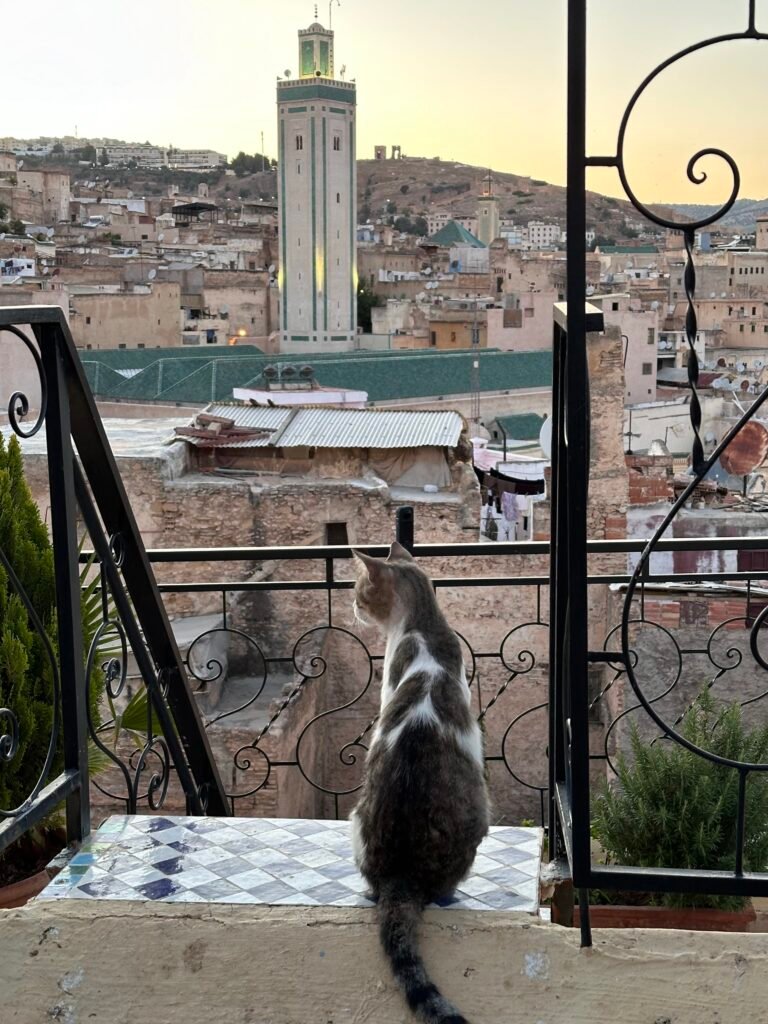
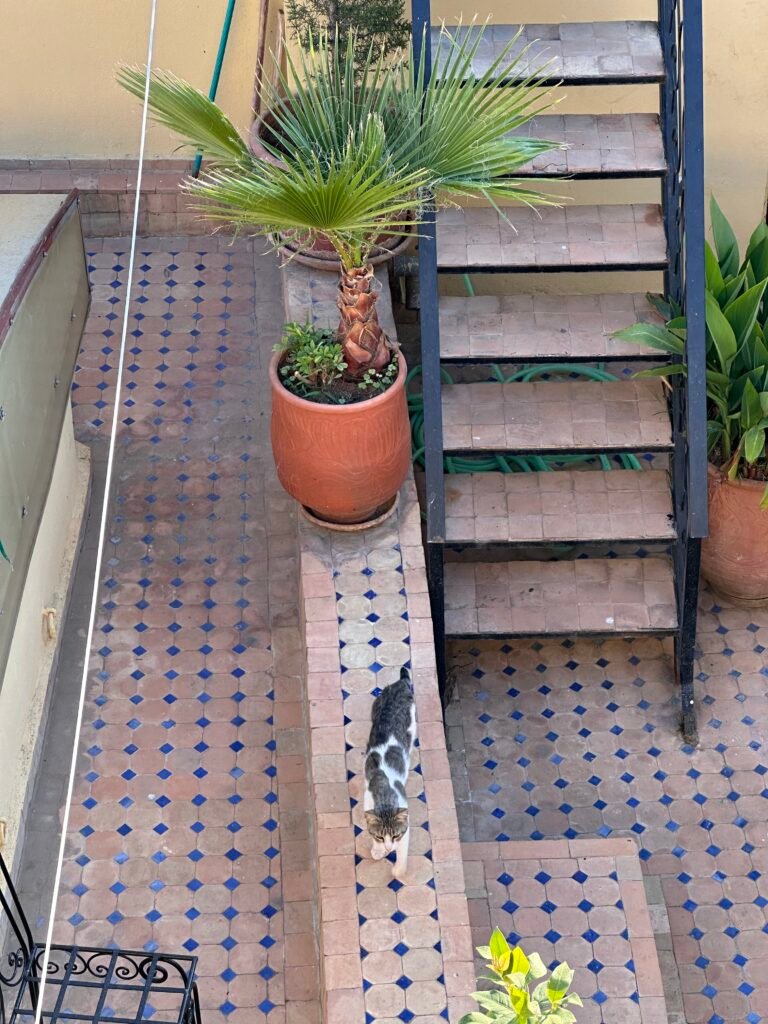
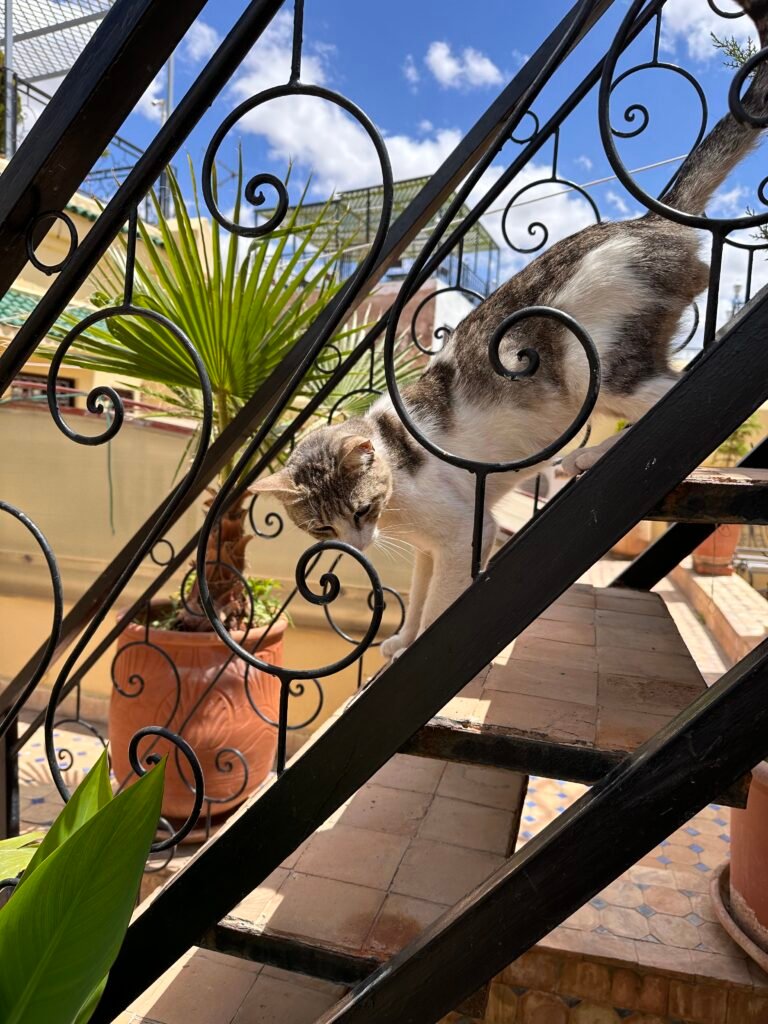
After a full day immersed in the energy of the medina, our favourite moments were the evenings. We loved escaping to the rooftop of our riad, where the city felt a little quieter, and watching the sun dip below the skyline. We were joined by a little curious friend who had clearly made the rooftop its home. As the sky turned deep shades of orange and pink, it curled up beside us, quietly keeping us company while we played cards and unwound. There was something so simple yet special about those moments, the cool air, soft purring, and a sense of calm after the chaos that stayed with me long after we left.
Casablanca
Leaving Fes behind, we jumped on a train to Casablanca—Hollywood-famous, though I have to admit, I still haven’t actually watched the film. Getting on the train couldn’t have been easier. Morocco’s rail system is impressively fast and comfortable, and before we knew it, we had arrived in Casablanca.
Almost immediately, we felt the contrast to the cities we had visited so far. This seaside metropolis felt distinctly modern, with tall buildings, wide boulevards, and a skyline that looked nothing like the winding medinas we’d just left behind. Western-style shopfronts and café-lined streets gave the city a more cosmopolitan feel, reminding us that Morocco is a country of striking contrasts, where centuries-old traditions and contemporary life exist side by side.
A friend recommended La Sqala, and it turned out to be the perfect spot for dinner after a full day exploring the Hassan II Mosque and strolling along the Corniche. If you’re looking for a pleasant, relaxing walk by the sea, the Corniche Boulevard is ideal, a long coastal avenue cooled by a gentle ocean breeze and dotted with cafés where locals linger as the sun begins to set.
Tucked away inside old city walls, La Sqala feels like a peaceful escape from the city’s modern pace. The restaurant offers traditional Moroccan dishes served in a beautiful garden setting, accompanied by live music that adds to the atmosphere without overpowering it. The service was warm and attentive, making it the kind of place where you’re happy to linger a little longer, soaking up the flavours, the music, and the unmistakable charm of Casablanca by night.
Essaouira
From Casablanca, we made our way to Essaouira, another coastal city filled with charm, character, and yet another completely different energy.
As we approached, the air felt fresher and cooler, carried in from the Atlantic, and the pace of life seemed to slow almost immediately. The climate in Essaouira surprised us, and we quickly realised we hadn’t packed the right clothes for this charming, laid-back city.
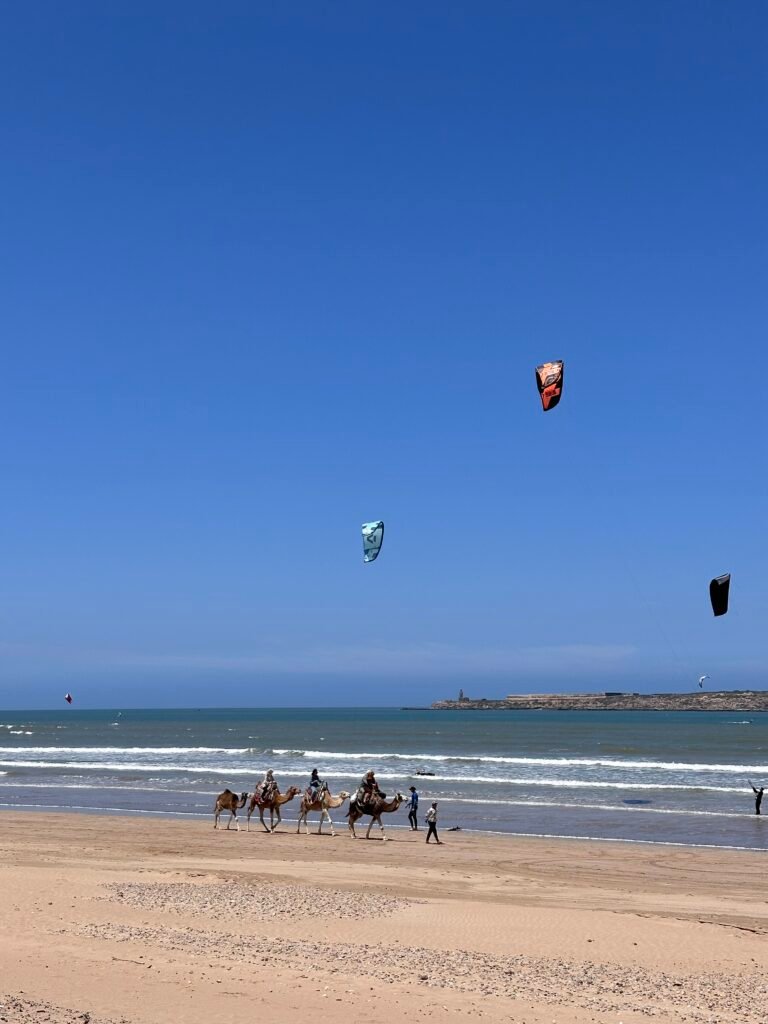
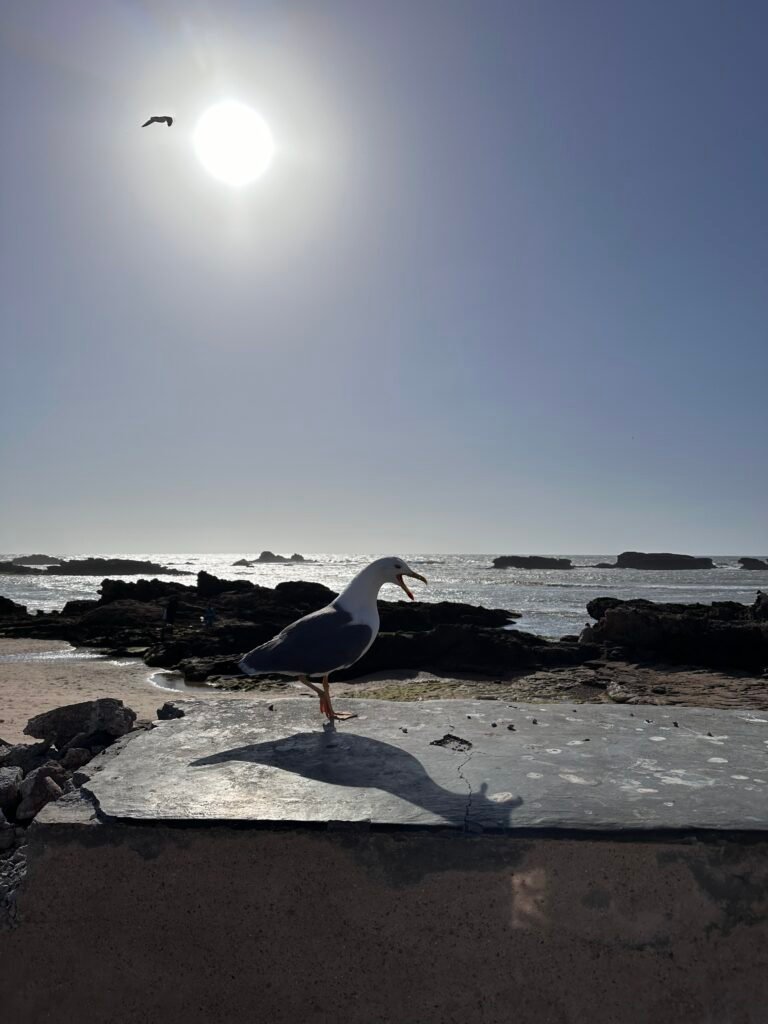
The Atlantic wind cut straight through us, but that didn’t stop us from enjoying ourselves.
Wrapped up as best we could, we set off to explore the medina. As a UNESCO World Heritage site, it is far more relaxed than those of Marrakesh or Fes, making it a joy to wander without feeling overwhelmed.
Narrow streets are lined with independent boutiques, art galleries, and woodcraft workshops, where the scent of thuya wood lingers in the air.
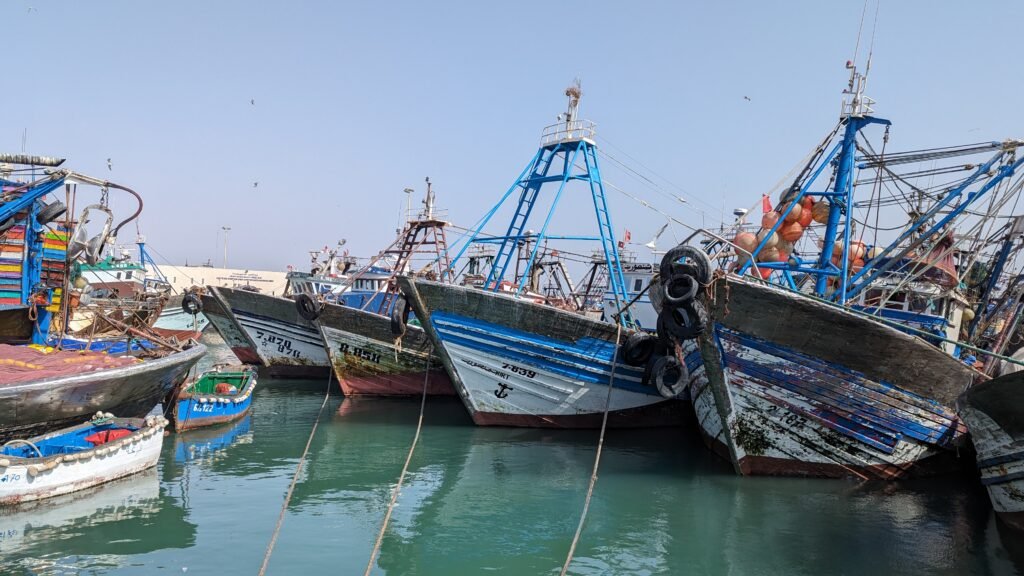
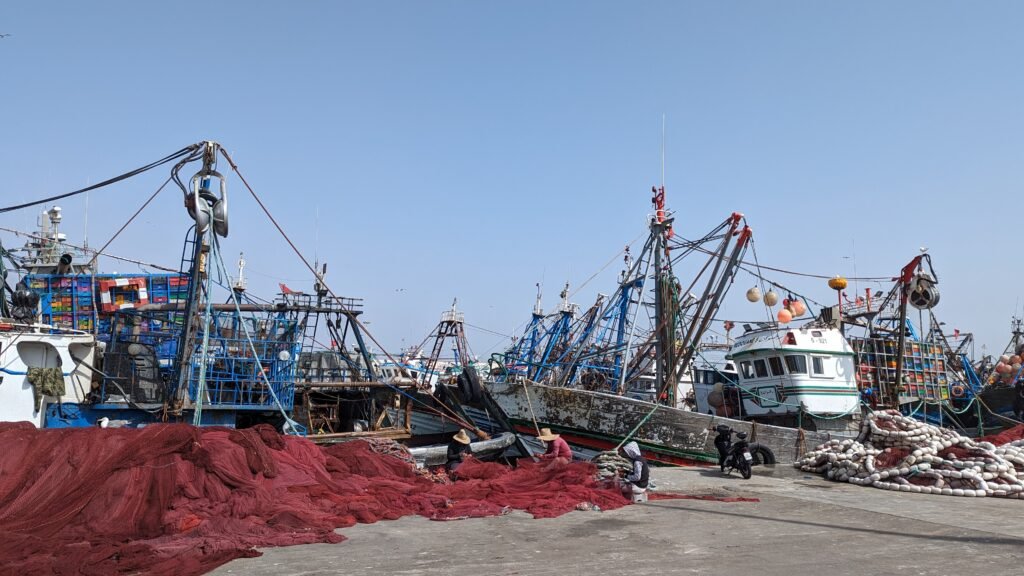
Down by the bustling port, fishermen bring in their daily catch as seagulls circle overhead, while the sound of waves crashing against the old city walls creates a soothing backdrop. We spent hours wandering aimlessly stopping for fresh seafood, watching kite surfers dance across the water, and simply soaking up the city’s easy rhythm.
During our stay, we stayed at the wonderful Dar Adul, which we couldn’t recommend enough. Its décor perfectly matched the spirit of Essaouira, effortless, artistic, and calming making it the ideal place to retreat after a day spent exploring the coast.
Marrakesh
Continuing our road trip, we arrived in Marrakesh, where the heat and sunlight wrapped around us the moment we stepped out of the car near Jemaa el-Fnaa the UNESCO recognised square and the beating heart of the city’s medina. From there, we made our way on foot toward our riad, navigating the lively maze of the old city.
Having visited Marrakesh before, I knew what awaited us. For my husband, experiencing it for the first time and already tired from the long drive, the square was an immediate sensory awakening. The air hummed with movement and sound: voices calling out, the rhythm of drums in the distance, the sizzle of food stalls preparing for the evening ahead. Bright colours filled every direction, from piles of spices to flowing fabrics, while the scent of grilled meats, orange blossom, and incense lingered in the warm air. People moved with purpose around us on foot, on bikes, guiding carts and animals, each part of a living, breathing rhythm that has defined this space for centuries. Overwhelming at first, yes, but also deeply alive and captivating in a way only Marrakesh can be.
From there, we stepped into a peaceful riad. As the giant, intricately carved wooden doors closed behind us, the noise of the square faded almost instantly. Jemaa el-Fnaa was left on the other side, its energy, sounds, and chaos replaced by cool tiled floors, soft light, and a sense of calm that felt almost surreal. It was a reminder of one of Marrakesh’s greatest charms, the way complete tranquillity can exist just moments away from the city’s most vibrant intensity.
We spent two days exploring Marrakesh’s medina, where every turn seemed to reveal something entirely new. No street ever felt the same as the last, each one offering a fresh glimpse into the city’s layered history and craftsmanship. Soon it felt like we were locals and could get around without a map in our hand which was close to impossible back in Fes. We wandered through the elegance of Bahia Palace, admiring its intricate tilework and tranquil courtyards, before visiting the vast ruins of El Badi Palace, where imagination fills in the grandeur that once was.
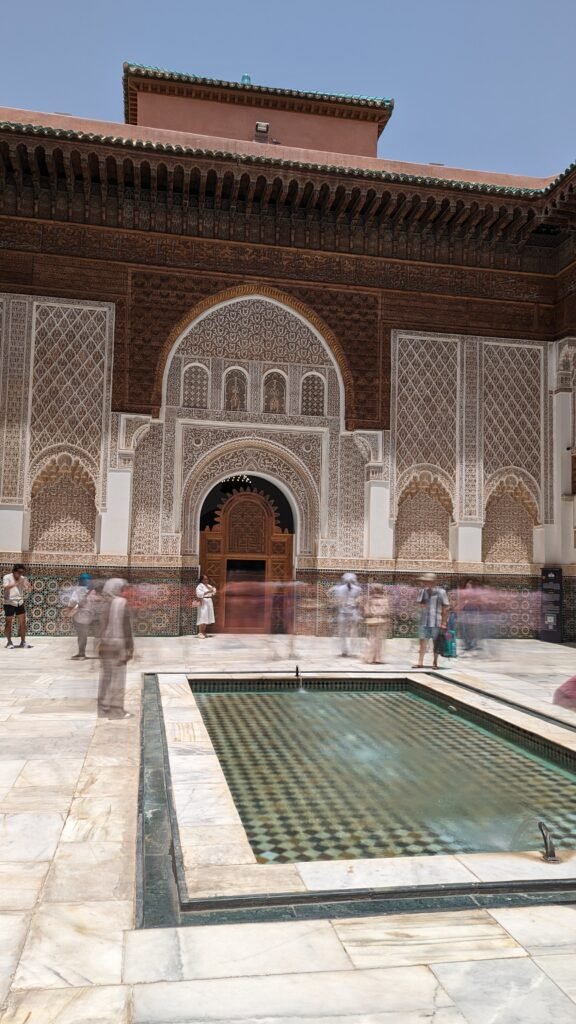
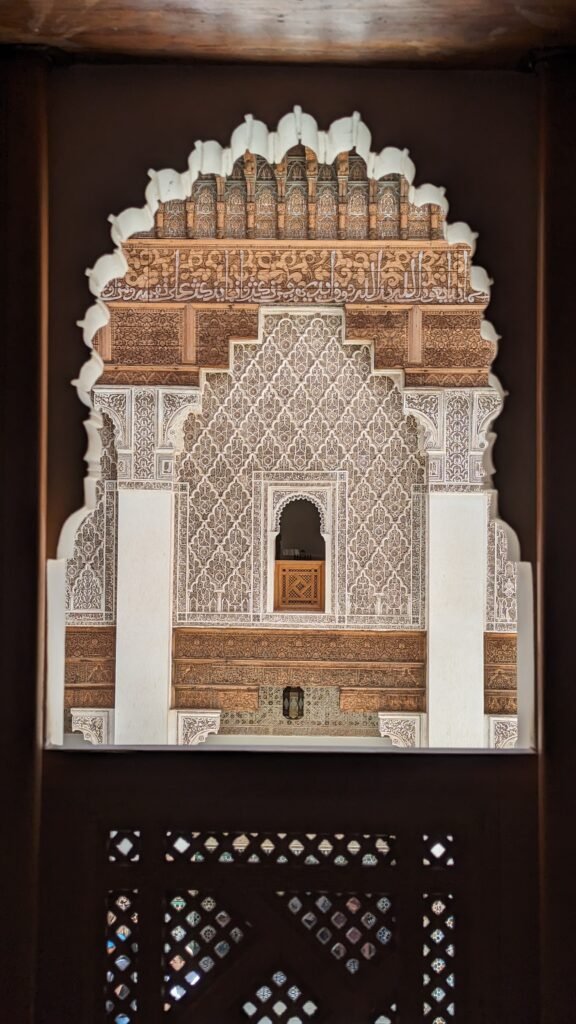
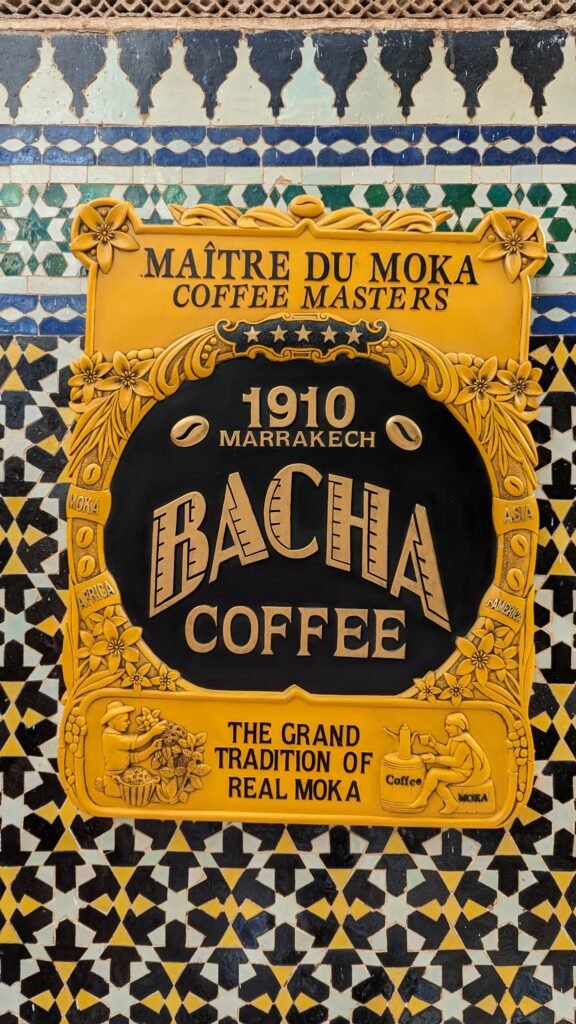
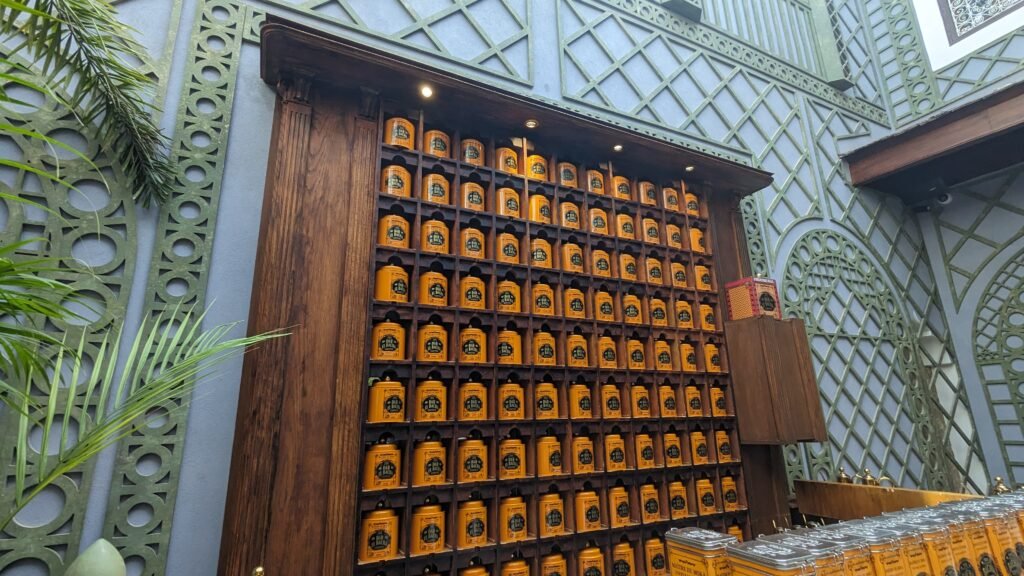
Medersa Ben Youssef was my highlight and a must visit, its beautifully preserved architecture and serene atmosphere offering a quiet pause amid the city’s constant movement. We also made time to stop at Bacha Coffee, a moment of indulgence and calm, sipping rich coffee in lavish surroundings before heading back into the rhythm of the medina. An unforgettable experience that I would highly recommend for all coffee lovers.
Evenings were spent on countless rooftops, enjoying the cooler air after long, humid days of exploring. One of my absolute favourites was DarDar, which is a must-visit, just be sure to book ahead so you can sit on the open rooftop. Watching the city slow down as the call to prayer echoed across the rooftops, with Marrakesh glowing in the fading light, became one of our favourite rituals.
Ait Ben Haddou
During our stay in Marrakesh we also took a day trip to the Ksar of Ait Ben Haddou, the oldest fortified village in the region and a UNESCO World Heritage site since 1987.
Located in the Ouarzazate province, this remarkable 17th-century earthen village feels frozen in time. This ancient ksar, made entirely from sun-dried mud brick, rises out of the landscape in a way that almost doesn’t feel real. From a distance, it blends into the surrounding earth tones, as though it has simply grown out of the desert itself.
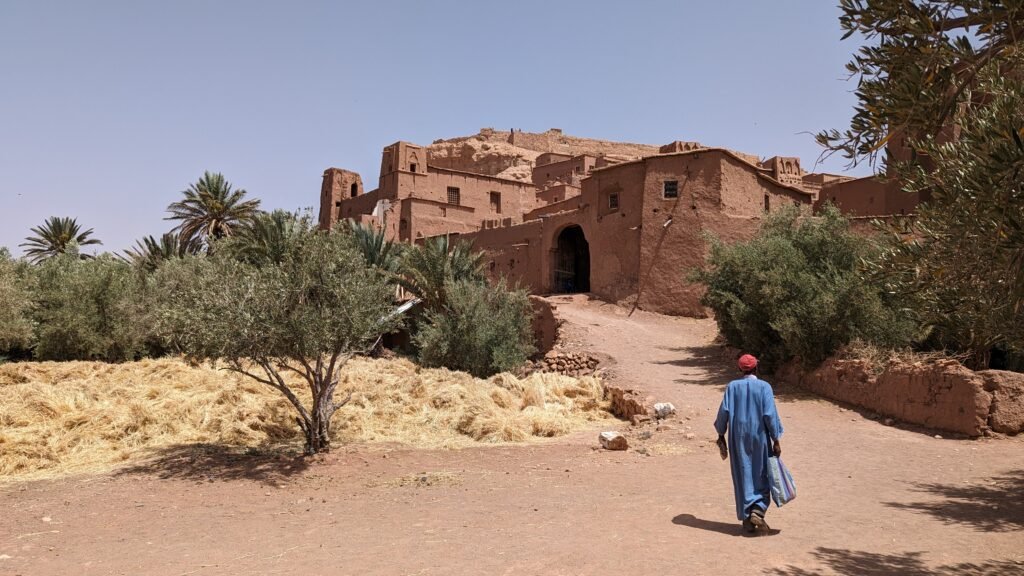
As we crossed the small bridge and made our way towards the entrance, it felt like stepping into another time entirely. We slowly made our way up through the winding paths, passing small doorways and crumbling walls, each one carrying a sense of history. The higher we climbed, the more breath taking the views became. At the top, overlooking the vast, dry landscape, everything stretched out endlessly in front of us—dusty plains, distant mountains, and that incredible contrast of textures and colours Morocco does so well.
Time to relax
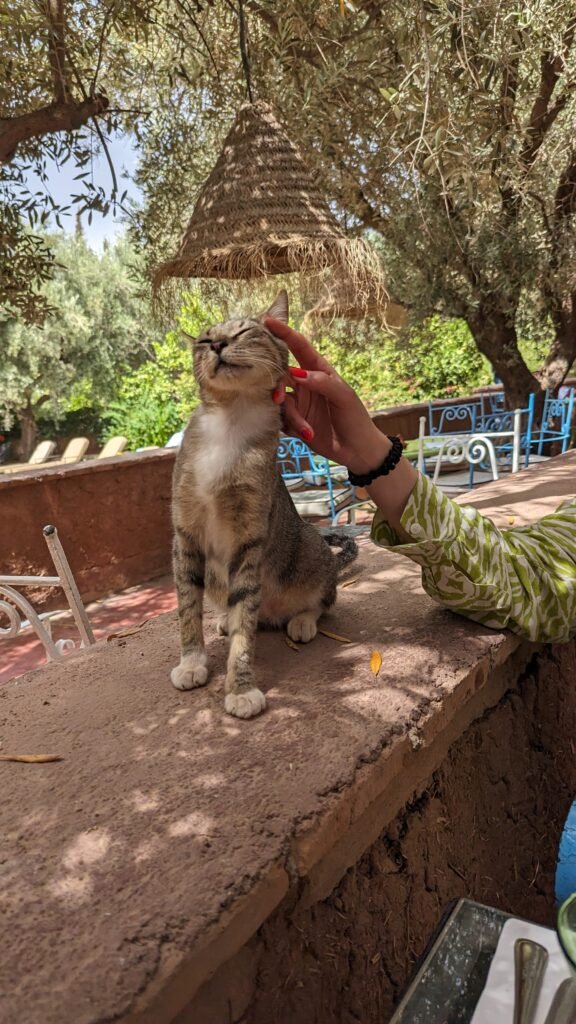
Our final stop was a recommendation from a colleague. If you have the time and your legs are starting to feel the miles of the medina escaping to Beldi Country Club is more than worth it. Just a short ride from the bustling medina, it feels like stepping into a slower, softer world. Whether you visit for the day, like we did, or stay a little longer, it offers the perfect contrast to the city’s energy.
Surrounded by olive trees and gardens, we settled in for a relaxed lunch in the shade, enjoying fresh, simple dishes that perfectly suited the calm setting. Afterwards, we spent a blissfully slow afternoon by the pool, doing very little at all.
It was the perfect reset. Marrakesh can be intense in the best way, but this quiet pause left us feeling refreshed and ready to dive back into its energy all over again.
By the time we left Morocco, it didn’t feel like we were simply returning home—it felt like we were leaving something behind.
Each city has given us something different: stillness in Chefchaouen, intensity in Fes, contrast in Casablanca, calm in Essaouira, and energy in Marrakesh. Together, they created a journey that was far more than just a trip—it was an experience that stayed with me in ways we hadn’t expected.
Morocco has a way of doing that—it lingers with you. And I know this won’t be my last time there. Because somewhere between the colours, the chaos, and the calm, it became a place I’ll always want to return to.